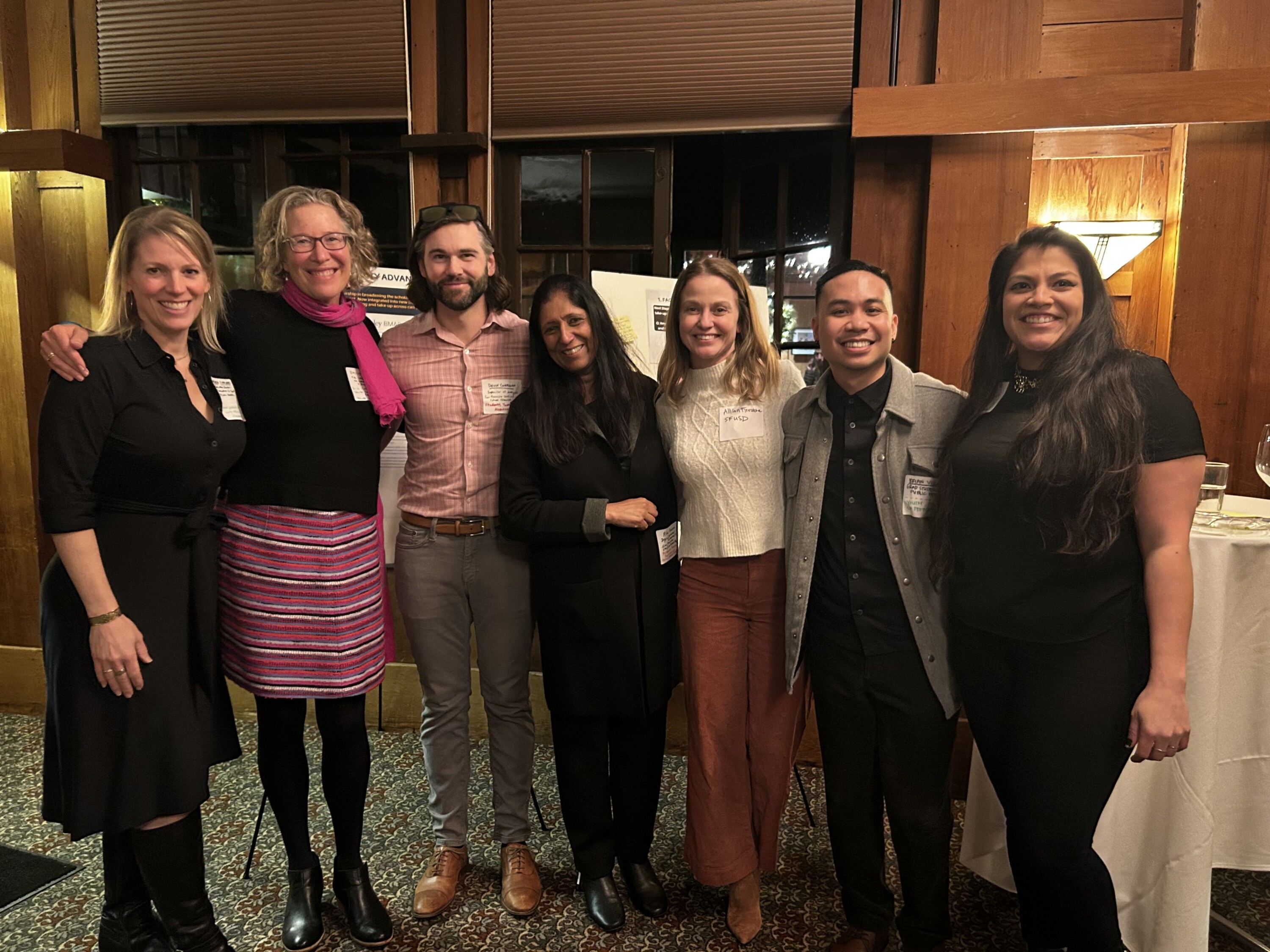
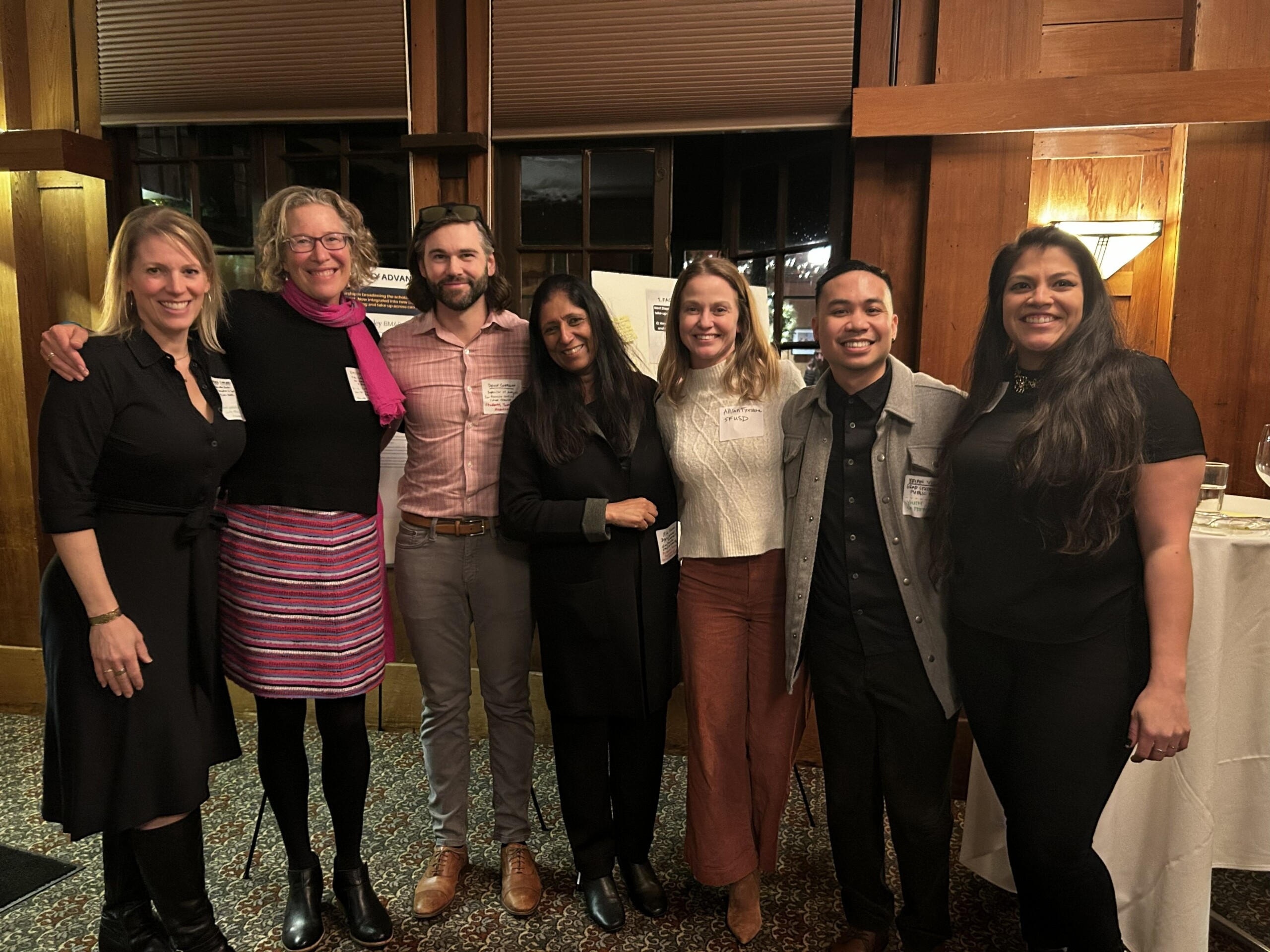
Photo courtesy of San Francisco Unified School District-UC Berkeley RPP
Improving outcomes for students, families, and communities increasingly depends on new forms of collaboration that bring educators, researchers, policymakers, community members, and youth into shared work. Research-practice partnerships (RPPs) are one expression of that commitment: long-term collaborations grounded in mutual learning, shared inquiry and research, and the complex work of sustainable systems change. These partnerships produce meaningful research and foster research use, and have emerged across social sectors, including environment, health care, education, and criminal justice, among others.
As partnerships grow, so does the need to reflect on how to stay healthy and effective. Across different contexts, RPPs face recurring questions: What practices help us reflect on and stay aligned towards our goals? How do we know when it’s time to change course? How do we navigate the inevitable bumps of uncertain environments and internal turnover?
There’s no single answer to these questions. What we’ve learned from both national efforts and on-the-ground work is that healthy RPPs attend to their structures, strategies, and relationships that support their ongoing work. Updated frameworks for RPP health name core dimensions of partnership work, such as developing trust and relationships, engaging in inclusive research that addresses local needs, and supporting practitioners or community organizations to progress toward their goals.
Like scaffolding on a construction site, these elements may not be the “finished product,” but they are essential for supporting the weight of the ambitious work while it’s still taking shape. Without that scaffolding, it becomes harder to construct something lasting, or adjust when the environment shifts. The scaffolding will look different depending on what’s being built, who is building it, and the conditions they’re working within.
In this post, we explore how two RPPs funded through the William T. Grant Institutional Challenge Grant portfolio—the San Francisco Unified School District-UC-Berkeley RPP and the Delaware Early Literacy Research-Practice Partnership (Delaware RPP)—have developed different but equally intentional ways of supporting the health of their partnerships. Each has constructed their own scaffolding, shaped by context, goals, and relationships, to support the weight and direction of their shared work. While both examples come from education, the lessons here can provide insights for partnerships across sectors seeking to foster deep, sustained collaboration in pursuit of systemic change.
A Relational, Adaptive Approach
The San Francisco Unified School District-UC-Berkeley RPP builds on a long history of collaboration among researchers and district leaders. Launched in 2019, the equity-focused RPP includes co-founding Berkeley faculty and members of SFUSD leadership, building on Berkeley’s longstanding partnership with San Francisco Peer Resources. The partnership focuses on ameliorating inequalities related to chronic absenteeism by integrating both district administrative data and youth-generated evidence from Youth Participatory Action Research (YPAR) into district decision-making routines.
For this partnership, health is sustained through a deliberately relational and adaptive infrastructure. In a large urban district characterized by leadership turnover, shifting policy priorities, and complex bureaucratic conditions, the partnership’s primary scaffolding comprises consistent rhythms that ground the work in relationships while allowing flexibility. The emphasis on building relationships and establishing trust early on contributed to the effectiveness of their structures and routines.
The team maintains biweekly Zoom meetings, twice-yearly in-person retreats, site visits (both informal and formal), and shared meals. These regular touchpoints are not incidental; they function as stabilizing structures that build familiarity and team cohesion.
In longer meetings and retreats, the partnership explicitly revisits broad strategy questions: What does sustainability look like, especially in a context of constant transition? What do we want this partnership to stand for at the university, in the district, and in the broader public? How should our work evolve in light of new district leadership or emerging priorities?
“Strategy is always on the agenda. We hold that space because we know it matters over time.” Brian Villa, SFUSD-Berkeley RPP
A half-day retreat, for example, creates space to strengthen relationships, build trust, and discuss strategy. The team starts their retreats with food, informal check-ins, and celebrations of both personal and professional milestones, recognizing that these activities support the overall well-being of the RPPs during challenging times. This in-person time also allows the team to deeply engage in strategic recalibration that is difficult to achieve in routine virtual meetings. These structured pauses create room to surface governance questions, clarify roles, and plan for succession—critical tasks in settings where knowledge can easily dissipate as individuals move on. Additionally, retreats provide dedicated time to write and reflect together, reinforcing the partnership’s intellectual coherence in addition to its relational bonds.
This orientation reflects a core feature of the partnership’s health strategy: Alignment is treated as an ongoing process rather than a one-time agreement. By repeatedly connecting research activities to live district priorities, the team strengthens both relevance and legitimacy.
“Knowledge grows, leaders turn over, and organizational priorities shift. To keep up, we have to regularly re-ask the most important questions that drive our work: How do the interests and skills within this RPP intersect with the District’s current vision? And how can we link our efforts directly to District decisions that leaders are grappling with right now?” Devin Corrigan, SFUSD-Berkeley RPP
The RPP has also extended its relational infrastructure beyond active members. When district leaders transition out of their roles, the partnership maintains connections by inviting former partners to serve as advisors or consultants. This practice preserves institutional memory and reinforces long-term trust across organizational boundaries.
Finally, the team has invested in storytelling—through public-facing communications, media engagement, and presentations—to position the RPP as a visible example of public impact scholarship. Doing so helps secure institutional support beyond individual champions and embeds the partnership within broader narratives about the university’s civic role.
“We’re working to position the RPP as a signature public impact research partnership for UC Berkeley, something that faculty, students, and leadership recognize and support.” Emily Ozer, SFUSD-Berkeley RPP
Together, these relational routines, strategic reflections, and institutional positioning efforts form the scaffolding that honors and sustains the SFUSD-Berkeley RPP. The structures allow the partnership to remain anchored in trust while continuously recalibrating to new conditions.
A Structured, Technical Approach
The Delaware Early Literacy RPP takes a more formalized, structured path to understanding and supporting its own functioning. This partnership between the University of Delaware and the Delaware Department of Education involves a specific focus on improving K–3 literacy outcomes in the state. The partnership works centrally with the Academic Excellence Team within the Delaware Department of Education, while also maintaining strong connections to the Early Childhood Excellence Team through its emphasis on Pre-K literacy development. In addition, the RPP collaborates closely with the Department’s data teams to both leverage existing literacy data already collected by the state and to build additional analytic and research capacity.
The Delaware RPP uses formal tools and systems to monitor, assess, and support the health of the collaboration, aligning their approach with both their goals and internal structure. The partnership includes teams dedicated to research, policy, and implementation, and a shared commitment to continuous reflection. This structure ensures that responsibility for the multiple aspects of partnership work—including its health and development—is planned for and led by a team.
“We built a plan to collect evidence of our health, from agendas to feedback loops, and mapped it against the components of effective RPPs.” Elizabeth Farley-Ripple, Delaware RPP
The team uses exit tickets at meetings to gather feedback on how the team is working, including the quality of collaboration and practical issues, such as data utility. For example, one exit ticket asked whether the meeting had been useful to move the partnership work forward; keep everyone up to speed on different aspects of partnership work; and create space for team members to share ideas, questions, and concerns. In another, RPP members are asked about how data were communicated, whether data were organized and visualized in a way that was helpful for interpretation, and whether the conversation was effectively organized for making sense of data, among other issues. These small check-ins help the group identify areas for adjustment, whether it’s revising visualizations, clarifying goals, or rethinking meeting design.
The Partnership Implementation Team (PIT), one of the RPP sub-teams, plays a key role in these efforts. PIT creates and administers the tools (e.g. exit tickets, whiteboards, or surveys), based on the RPP Health and Effectiveness Framework and observations of partnership development. They also review data from across the partnership and help identify when and where course correction is needed. For example, after meetings with key state stakeholders, PIT talked with RPP members to reflect on the meeting and discuss how they balance conversations between close partners with less involvement and key stakeholders in the issue area.
Conversations around data have also matured over time. Drawing on meeting notes, the team noticed that research partners have become more skilled at sharing findings that are both timely and relevant, while policy partners have become increasingly engaged and comfortable discussing specific aspects of research questions, methods, and findings. The shift is noticeable in how the dialogue, learning, and trust among the group has evolved from clarifying graphs and terminology to digging into the reasoning behind the research.
“The move from ‘I don’t understand the chart’ to ‘Why are we asking this question?’ – That’s a sign of learning. And we’ve seen that growth.” Elizabeth Farley-Ripple, Delaware RPP
Call to Action
Both RPPs draw on shared ideas about effective collaboration like relational trust, shared ownership, and continuous reflection but apply them in ways that reflect their contexts. They serve as two examples of how RPPs can be thoughtful and deliberate in their care for the partnership itself.
If you’re part of an RPP, it’s always a good time to check in on:
- What forms of scaffolding—such as shared routines, processes, tools, or practices—are currently supporting your RPP?
- In what ways are these structures helping your team stay connected to its shared goals, navigate roles across research and practice, or respond to evolving priorities? Where might they need to be adapted?
- How are you assessing whether your scaffolding is strong enough to support the next phase of your partnership’s work? How are you making space to reflect and adjust over time?
If you’re a funder supporting RPPs, consider how your investments can help strengthen the scaffolding that makes meaningful work possible:
- How are RPPs in your portfolio tending to the structures, relationships, and routines that support their collaborative efforts?
- Are there opportunities to support time, space, and resources for reflection, learning, and alignment, and not just focus on deliverables?
- What signals do you send, explicitly or implicitly, about the value of attending to partnership health, in your convenings, grant proposals, or in conversation with your RPPs?
Together, we can support RPPs to be deliberate in designing the supports that allow their partnerships to grow, adapt, and endure.