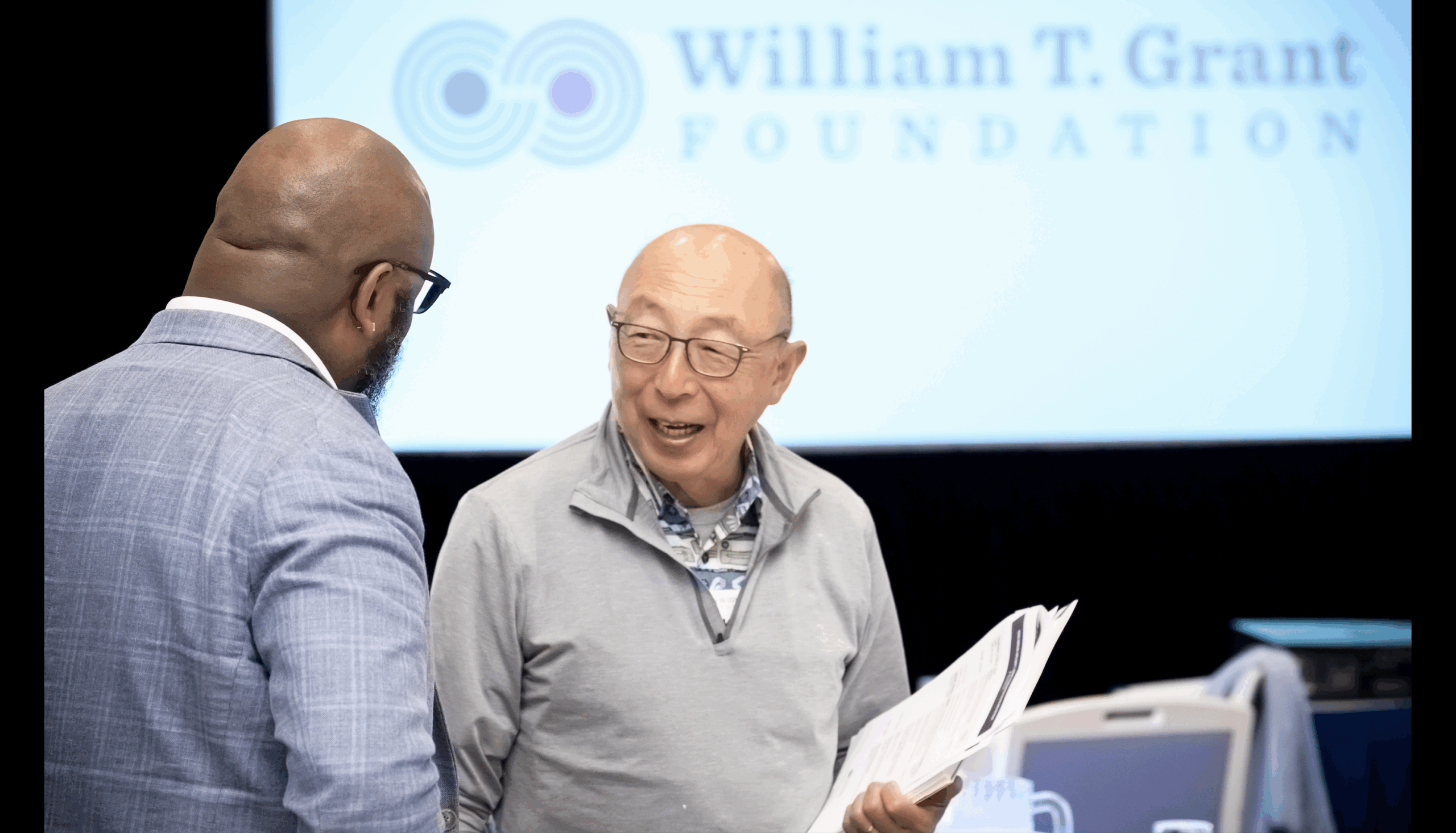
A highlight of my year is spending time with William T. Grant mentoring grantees at our annual retreat, which is designed to create community and inspire and support mentor dyads. Our particular focus on navigating mentoring dynamics provided robust discussion and problem solving around situations that can stunt relationships and inspired our awardees to see each other as allies and supports in their professional and academic journeys.
One aspect of mentoring dyads that is often overlooked is the consequential reality of power differences. Even in the healthiest mentoring relationships, status differences can challenge the ability to speak honestly and truthfully over issues of importance. While some are obvious and natural hierarchies, such as academic rank and status earned through experience and contributions to the field, the more insidious differences are sometimes veiled and difficult to address. Our own positionality, informed by aspects of identity such as race, gender, sexual orientation, ability status, and socioeconomic status, to name a few, can privilege and disadvantage either member of the mentoring dyad. An additional layer of complexity emerges from how we negotiate status through destructive filters such as imposter syndrome and stereotype threat—sometimes blurring hierarchical structures, where even senior scholars who seemingly hold high status can feel that their power is significantly diminished.
Mentors should make time to have honest and direct conversations about their reflections on power and how they see themselves in the structures they are part of
Certainly, these challenges are multifaceted and complex. While no one intervention or edict can remedy these, we do know that considering mentoring’s most foundational principles—honesty and trust—can do a great deal to confront the issues inherent in power dynamics. Mentors should make time to have honest and direct conversations about their reflections on power and how they see themselves in the structures they are part of. This can be revealing to both members of the dyad: Each may have assumptions about how their dyad partner is placed in power structure, which can be more accurately understood after an honest (and potentially difficult) discussion.
Simultaneously, mentees should initiate discussion about their preferred forms of communication. How should a mentor convey feedback, critical or otherwise? How can a mentee share their feedback or ideas to their mentor (as mentorship is a reciprocal relationship, providing feedback and advice is as important from mentees as mentors)? Perhaps most importantly, a spirit of engagement without fear of retribution is foundational for both in the dyad. And with the recognition that even healthy relationships are sometimes in need of advice and assistance, having staff who can serve as a sounding board or provide references to services is an essential component of a strong mentoring ecosystem. All parties in a mentoring relationship should be protected from exploitation and abuse, and having resources that both mentors and mentees can access provides a level of protection.
For those of us who lead and direct institutions, it is imperative to go beyond performative statements on the value of mentoring
Focusing on mentoring dynamics—how mentors and mentees navigate communication and issues, which might seem minor, but can easily escalate and truly thwart positive developmental relationships—is an apt way to acknowledge that conflict and differences of opinion are natural and normal aspects of working in a mentoring dyad. Rather than seeking social reproduction, in its best form mentoring provides a robust and healthy exchange of perspectives. While we often assume mentees are recipients of advising and support, the reality is that mentors simultaneously are learning and growing in their own development, whether they are close in age and experience to their mentee, or a seasoned senior scholar. Indeed, one of the most consistent findings from the work I’ve conducted over the years studying mentoring dynamics is that mentors report immense satisfaction and appreciation for the reciprocity in the relationship, which is not always something that mentees know.
For those of us who lead and direct institutions, it is imperative to go beyond performative statements on the value of mentoring and provide scaffolding and resources to allow senior scholars and emerging researchers to engage in healthy, fruitful relationships to advance our efforts to reduce inequality. We must endeavor to truly unpack issues that thwart and diminish effective relationships, honestly assessing how power dynamics impede communication and feedback between mentors and mentees. Developing ecosystems of authenticity, honesty, and environments free from retribution and intimidation will prime the pump for mentoring dyads to reach their fullest potential.