Located in the heart of downtown Atlanta, Georgia State University is part and parcel of the city it calls home. As Jonathan Smith, faculty director of the Georgia Policy Labs (GPL) and professor of economics at Georgia State, put it: “Georgia State and the city of Atlanta are inseparable.”
That sentiment is one driver of GPL’s research-practice partnership with Achieve Atlanta, a non-profit that strives to help students in the Metro Atlanta area access, afford, and earn postsecondary credentials through its need-based scholarship program.
In 2022, the Foundation awarded GPL an Institutional Challenge Grant to fortify the partnership, carry out a co-designed research agenda evaluating the Achieve Atlanta Scholarship, and drive institutional change at Georgia State to reward community-engaged research.
The Institutional Challenge Grant maintains that research-practice partnerships are one of the most promising avenues for promoting the production and use of rigorous and relevant research evidence, better aligning researchers, policymakers, and practitioners in their efforts to reduce inequality. Researchers who partner with practitioners or policymakers are better equipped to understand local contexts and produce actionable findings, while policymakers and practitioners can more easily access, interpret, and use research evidence when they collaborate with researchers.
The partnership between GPL and Achieve Atlanta is one notable example of how community-engaged research can inform policy and practice in ways that make a marked difference in the lives of young people. In the four years since receiving the Institutional Challenge Grant, the team has cultivated robust partnering relationships that have led to published findings on the advantages students reap upon receiving the Achieve Atlanta Scholarship. And at the programmatic level, Achieve Atlanta quickly mobilized this research to reach more students who would benefit from the scholarship, expanding opportunity beyond Atlanta Public Schools to high schools in a neighboring district for the first time.
“The Georgia Policy Labs partnership has provided both external validation of our impact and internal learnings that have strengthened how we serve Achieve Atlanta Scholars and enabled us to expand our impact to additional high schools,” said Achieve Atlanta’s President/Executive Director, Cheryl Watson-Harris.
Crafting a Research Agenda
As college tuition rates skyrocket, combined with decreased state funding for higher education, many students leave college with large amounts of student loan debt, further exacerbating racial and economic disparities in the ability to repay debt. Black students are more likely to take on student loan debt in greater amounts, and default on those loans, than their counterparts. Moreover, low-income students are also more likely to accrue student loan debt than those from higher-income families, with the majority of student loan defaulters having received a Pell Grant at some point in their college careers.
The partnership between GPL and Achieve Atlanta aims to address these racial, ethnic, and economic disparities in student borrowing, and ultimately reduce long-term inequities in higher education attainment. At Achieve Atlanta, 94% of Scholars are Black or Latinx, 96% are Pell eligible, and over half are first-generation students. Since its founding in 2015 through spring 2026, Achieve Atlanta has awarded more than $75 million in scholarship funds to help students access post-secondary credentials.

Photo Credit: Sylvia Jarrus for the William T. Grant Foundation
The team first employed quasi-experimental methods to answer this question, linking data from GPL, Achieve Atlanta, Atlanta Public Schools, the University System of Georgia, and the Technical System of Georgia to estimate the scholarship’s effects on students’ academic outcomes.
The study’s initial findings, shared in a 2024 report, highlighted the benefits of lifting students’ financial burden. Achieve Atlanta Scholars were less likely to take out loans than non-Scholars, and consequently, experienced improvements to their financial well-being. Scholars also earned more credit hours and had higher GPAs in their first semester of college than non-Scholars.
The partnership between GPL and Achieve Atlanta is one notable example of how community-engaged research can inform policy and practice in ways that make a marked difference in the lives of young people.
“We’re seeing in the data, quantitatively, that there are positive outcomes. But then what does reduced stress look like in practice, and what does that enable [students] to do financially that they couldn’t before?” said Sam Rauschenberg, the vice president of growth and impact at Achieve Atlanta.
To that end, an additional project recruited Achieve Atlanta Scholars to engage in critical participatory action research (CPAR), illuminating how students understand the scholarship, their college experiences, and their relationship to borrowing and financing their education. Through surveys and interviews, students reported that the scholarship reduced their financial stress, which improved their academic performance and overall college experience.
The 2024 report described above is one example of the ways CPAR “lent a voice to a lot of the quantitative findings,” Smith said, with this mixed-methods approach “chang[ing] the analyses we did and continue to do.”
Cultivating Trust in Partnering Relationships
Research shows that building trust and cultivating strong relationships are foundational to research-practice partnerships’ ability to address complex issues in local communities. As such, one core goal of the Institutional Challenge Grant is to support and facilitate partners’ ability to establish long-term, mutual relationships, understanding that these structures often require significant time and investment.
In Atlanta, the Institutional Challenge Grant formalized and strengthened the partners’ relationship in ways that allowed for more fulsome collaboration on the questions central to Achieve Atlanta’s programming.
Achieve Atlanta and GPL sit four blocks apart from each other. Smith has his own desk at Achieve Atlanta that he works out of once a week. That physical proximity mirrors the partners’ interpersonal dynamic, with close, trusting relationships serving as the bedrock of the partnership.
We’re answering questions that … in the absence of a graduate student or research fellow, we probably would not have the time or capacity to sink our teeth into
“These relational experiences—being able to work through questions and challenges together in real time—are unique to the RPP world, but they’re also a product of the particular relationship [Achieve Atlanta] has built with GPL,” said Janelle Clay, the senior manager of research and evaluation at Achieve Atlanta.
For Rauschenberg, “trust is such an important currency in research,” he said. Early in the partnership, he was conducting an analysis to refine Achieve Atlanta’s approach to helping students enroll in institutions that match their academic credentials—an area in which Smith had expertise from doing similar research at the College Board. The nature of their relationship allowed Rauschenberg to turn to Smith and ask: “Can I pick your brain?” In a similar fashion, Smith regularly invites himself to Achieve Atlanta meetings to better understand the program’s on-the-ground work.
“The relationship is such that we feel like we can ask each other questions in ways that you wouldn’t if you were just having a conversation as part of a broader meeting every two months,” Rauschenberg said.
At the same time, successful research-practice partnerships require that these tight-knit relationships exist throughout both partner organizations, not just among individuals. “What the Achieve Atlanta model does really well are the multiple levels of relationships that are important for sustainability and trust,” said Katherine Dunn, the senior director of GPL. Relationship-building across all levels of both organizations, from their deans and executive directors all the way down to programmatic staff. “There are multiple points of connection, so that it’s not relying on Jon and Sam getting along and trusting each other.”
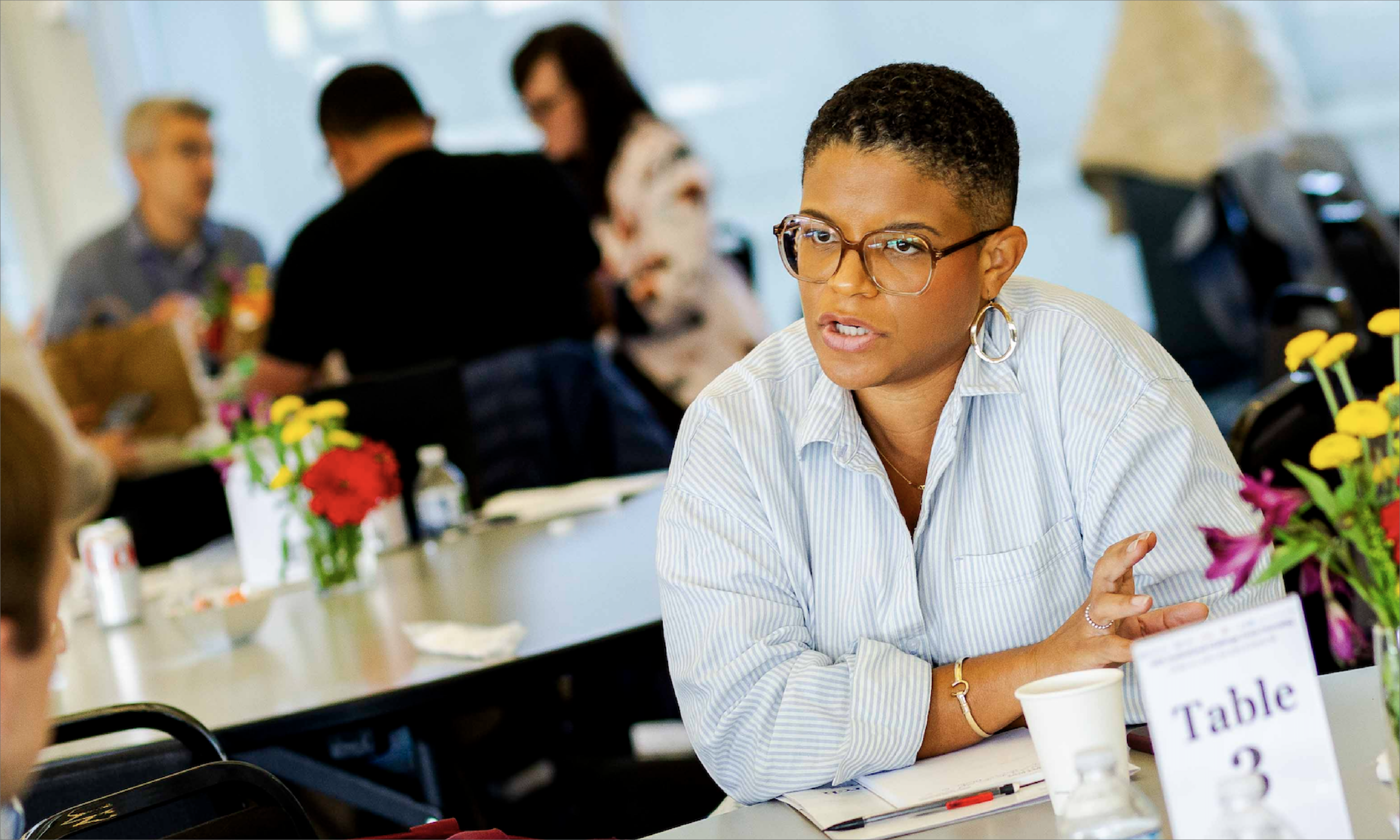
Photo Credit: Sylvia Jarrus for the William T. Grant Foundation
In Clay’s previous experience as an external researcher, she observed that relationships typically developed alongside the community partner’s research team but did not trickle down to other staff. She noted that Smith’s presence in Achieve Atlanta’s office—and subsequent relationships with its staff—has allowed for a more holistic understanding of Achieve Atlanta’s work, its challenges, and where research evidence might have impact in its programming.
“With Jon coming to our office, he’s able to develop relationships with our programs team, hearing how they’re thinking about the work and the challenges that they’re having in implementation. Then that real-world immediate feedback of what he’s seeing in the data goes directly to our programs team,” said Clay.
She added that GPL’s deep understanding of Achieve Atlanta cultivated through the partnership differed from that of external researchers, who “may understand the research question but all the other things that go into K-12 operations are further removed,” she said. “There’s a lot of familiarity with the work that we’re doing and our efforts that allow [GPL] to be a little bit more responsive than traditional university research partners.”
Cultivating Trust in Partnering Relationships
With trusting, mutually beneficial relationships in place, research-practice partnerships are well-situated to produce research that is rigorous, responsive, and relevant to community partners’ needs. The partnership between GPL and Achieve Atlanta illustrates that this kind of research is possible when universities and community organizations team up—and the immediate positive impacts this work can yield for youth outcomes. Through rapid response projects made possible only through partnership work, GPL and Achieve Atlanta are already making a mark on policy and practice, in Atlanta and beyond.
When GPL conducted its first external evaluation of Achieve Atlanta’s programming in fall 2022, prior to receiving the Institutional Challenge Grant, one recommendation particularly stuck out: “There are probably students above our need threshold—an $8,000 expected family contribution (EFC) on the FAFSA—that could still be considered in financial need but are missing out,” Rauschenberg recalled.
On its own, Achieve Atlanta might not have had the research to convince its board to expand the scholarship’s eligibility criteria. But data from the University System of Georgia shared through the partnership meant that GPL could estimate how many students attending the state’s public universities had EFCs ranging from $8,000 to $20,000. Using this data, Smith conducted quick cycle analyses and found that an additional 35 to 40 students per year might benefit from Achieve Atlanta’s scholarships if the need threshold were raised to an EFC of $15,000. Achieve Atlanta staff brought these findings to its board, and that next year, 37 students who were previously ineligible received and benefitted from the scholarships.
Additional data from the University System of Georgia and the Technical College System of Georgia collected through the partnership allowed Achieve Atlanta to conduct a landscape analysis of financial need across metro Atlanta, culminating in its decision to expand into Fulton County Schools last year. This fall, two Fulton County schools are sending scholarship recipients to college. Students at four more Fulton County schools will be eligible to receive the Achieve Atlanta scholarship in 2027.
The scholarship expansion is just one example of how partnership work can bolster an organization’s capacity to use research to answer questions about its programming—and make tangible differences in the lives of young people as a result.
“We’re answering questions that … in the absence of a graduate student or research fellow, we probably would not have the time or capacity to sink our teeth into,” Clay said.
At Achieve Atlanta, the expansion landscape analysis “would not have been possible if we had tried to go to the University System directly,” Rauschenberg said, adding that the partnership’s data sharing played a critical role in building their case. “If we wanted this question answered, Jon’s team wouldn’t go through the process to get the data shared. It wouldn’t have been worth it. But [the data] are already there.”
Those of us who are close to the work know it’s not just in the numbers. It’s also how [students] see their own progress and whether they feel like they’re moving forward
The partnership’s research has produced ripple effects outside of the Metro Atlanta area. Georgia was one of only two states without statewide need-based aid, instead offering merit-based programs through its HOPE Scholarship—until recently. When the Georgia Senate held hearings on higher education affordability last fall, Watson-Harris testified in front of the committee with research from the partnership, highlighting the positive academic, financial, and emotional impact need-based aid has for Achieve Atlanta participants, helping inform the policy discussions and solutions to college affordability. Georgia passed its first statewide need-based aid programing in May.
For Smith, the partnership’s research equipped Achieve Atlanta “to testify in front of an important committee that was a big piece of the puzzle that helped the state move in the direction that is sadly needed.”
“Having the outcomes to show need-based aid making a difference was critical in helping policymakers feel more confident about scaling a solution,” Rauschenberg said.
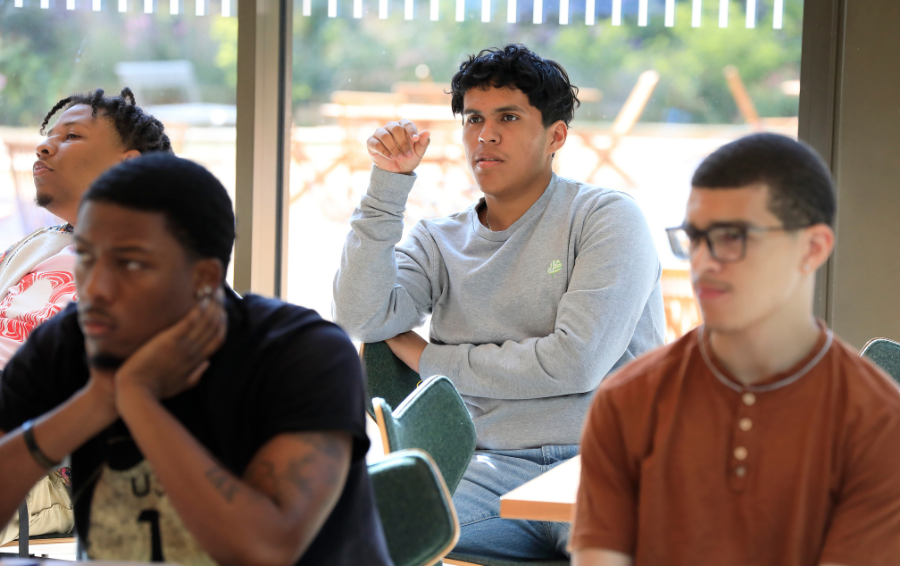
Photo Credit: Achieve Atlanta
Upward and Onward: Tracking Longer-Term Outcomes
As the partnership heads into the next phase of its research agenda, the team is exploring how Achieve Atlanta Scholars experience life after college, examining their transition into graduate school and the labor market. At the core of this work, they’re asking: What does upward mobility mean?
It’s a question that’s proving not-so-simple. The team recently received access to Georgia’s state longitudinal data system, allowing them to track students’ longer-term financial outcomes. Though instructive, the data alone may not capture students’ varying definitions and understandings of upward mobility. As Clay puts it: “Those of us who are close to the work know it’s not just in the numbers. It’s also how [students] see their own progress and whether they feel like they’re moving forward.”
To untangle these multiple meanings of mobility, the team is also conducting qualitative work alongside analyzing the longitudinal data. Amy Stich, the project’s qualitative lead, along with co-researchers––including two former AATL Scholars––completed nearly 50 interviews with Achieve Atlanta alumni. “Our participants are the real experts in this research. They not only pushed us to rethink widely accepted definitions of success and upward mobility, but they also helped us to identify real opportunities for Achieve Atlanta to further support students as they transition into the workplace or graduate school,” Stich said.
These perspectives are helping Achieve Atlanta staff think through how their programming might help ensure that students have a strong steppingstone in the transition from school to work.
“Hearing from our alums on their experience and what they’re living through now is helping us have more nuanced approach to that to meet their needs,” said Rauschenberg.
There are still questions ahead for the team to continue unraveling. But in the meantime, by making Achieve Atlanta’s scholarships more widely available to students, the partnership is already evidence of the tangible, positive impacts that engaged research can have for local communities when universities meaningfully incentivize and reward this work.
• • •