Amid the 2020 racial reckoning following George Floyd’s murder, school districts nationwide ushered in new policies to implement inclusive, antiracist curriculum. In the following years, however, political backlash mounted against these efforts, with dozens of states passing legislation barring instruction on race.
Such attacks contradict not only what some educators know to be effective pedagogy, but what many Americans say they want for their children: Culturally responsive instruction, which introduces students to diverse perspectives, improves learning and belonging, and prepares future citizens for a multi-racial democracy. Amy Stuart Wells and Janelle Scott received a grant from our Foundation to review a growing body of research evidence from disparate disciplines to summarize better understand the extent of support for such claims.
Through their William T. Grant Foundation-funded project, “Public Learning for a Multiracial Democracy: A Project to Construct a New Narrative,” Amy Stuart Wells and Janelle Scott aim to mobilize this research and equip educators, advocates, and others on the frontlines with evidence-informed messaging to counter these attacks. To do so, they convened working groups to review and synthesize existing research across disciplines and develop briefs in four areas: Social Movement Building, Learning Theory and Pedagogy, Social-Psychological and Sociological Impact of Education, and Legal and Political Strategies for Transformation. Wells and Scott then collaborated with communications experts to frame their research findings for a broader audience. In the next phase of the project, Wells and Scott will leverage these communications tools to seed a movement in support of antiracist education.
Already, the project has begun to shape policy and practice. Last fall, Wells, Scott, and colleagues produced an amicus brief, grounded in the research reviewed in this project, on behalf of the National Academy of Education in support of the ACLU’s legal challenge to Oklahoma’s classroom censorship law. A second, similar National Academy amicus brief in support of the ACLU’s legal challenge to the U.S. Department of Defense’s curriculum censorship and book bans in DoD schools was filed on June 3.
In a conversation with the Foundation, Wells and Scott discussed the role of research in guiding social movements, the value of interdisciplinarity, and how researchers can support educators. This interview has been edited and condensed for clarity.
Describe the project. How has it evolved?
Amy Stuart Wells: It goes back to late 2020, early 2021. There was a growing number of educators—across all racial and ethnic backgrounds—starting to appreciate the work that had been done around culturally responsive practice and more inclusive curriculum and pedagogical strategies. That is when we started to see the backlash against critical race theory at that time, and now DEI. We have a history in this country of making progress on civil rights issues and then moving back. This was starting to impact a lot of schools—the research and practice around inclusive strategies and curriculum—and really impacting state level policies at that time. Once the backlash against this incredible work began, we started meeting during the pandemic, just a bunch of us who cared deeply about these issues.
Janelle Scott: We wanted to meet with people who knew the research around inclusive education. We’re using inclusive education to mean education that includes the full range of human experience. When you yoke that kind of inclusive curriculum with rigorous approaches to teaching and learning, students thrive, and by extension, communities and our democracy thrive. We formed this group of folks that included researchers, but also educators and school leaders and journalists and advocates and teachers’ unions and funders, to grapple with what was happening, but also to think about what role, if any, research could play in in trying to intervene or interrupt what was happening.
What we started to hear thematically from folks who were on the ground was that when they were going to talk to decision-makers, they didn’t have the evidence to support the warrants that they were trying to make. They felt that researchers could play a really critical role there, in helping them have research on hand that synthesized what we know. Out of that awareness, we proposed to the William T. Grant Foundation to develop research syntheses in a few areas. Now we’re hoping to mobilize this knowledge and get it into the hands of people who might be able to use it.
A unique feature of the project is the fact that it brings together many different disciplines to demonstrate the value of culturally responsive education. What were the benefits of taking a cross-disciplinary approach?
ASW: The beauty and complexity of our field of education is that it is interdisciplinary. Unfortunately, too often, researchers get very siloed in their disciplines. This was an effort to create a sum of the parts of the different disciplines and areas of expertise in the field, to come together to craft a coherent a story of what could be a very powerful way to frame public education for a multiracial democracy. We wanted to try to synthesize this interdisciplinary research in a way that we could then communicate to a much broader audience. We’ve always thought if we could bring research to bear, to support people’s own sense of where we should be headed, that it would create the ammunition that Carol Weiss (1977) talks about in terms of uses of research to support people’s sense of moving forward as a multiracial democracy.
JS: The intentionality around interdisciplinarity was a part of the design process. We wanted a brief on learning theory and research on teaching. What does learning theory and research on teaching tell us about good pedagogy? That necessarily involves understanding from neuroscience and culture and context and adolescent and youth development. The topic itself invites that kind of interdisciplinarity.
Similarly, the role of research in social movements is really important. One of the hidden superpowers of research is that when we look across the history of social movements almost anywhere, even out of the U.S. context, research has been consequential for social movements, both in terms of how social movements inform research, but also how research informs social movements. When we look at the midcentury civil rights movement, and in such incredibly important legislation like the Voting Rights Act and the Civil Rights Act, research was an essential part of that.
What role might research on strategies to reduce inequality have in mobilizing social movements?
ASW: The thing that’s always stuck with me in Marshall Ganz’s work (2010, 2024) is where he talks about the “story of self, the story of us, and the story of now” as a way to build the movement. If research is the “story of us,” then it makes sense that research plays a role in building these movements, because people connect what we learn from the research to their own story of self and their story of “now.” [Research] connects to their life experiences and what they care about for their children and hopefully for other people’s children in public education. Most people in the U.S. do not want a bunch of empty bookshelves in school classrooms.
So this project asks, What role can the research play to support people in their own understanding of what’s important in public education? How can this research resonate with them and empower them to speak up and connect with others? And how could we build more momentum for a lot of the resistance that is happening, but happening often in local contexts and disconnected to other forms of resistance?
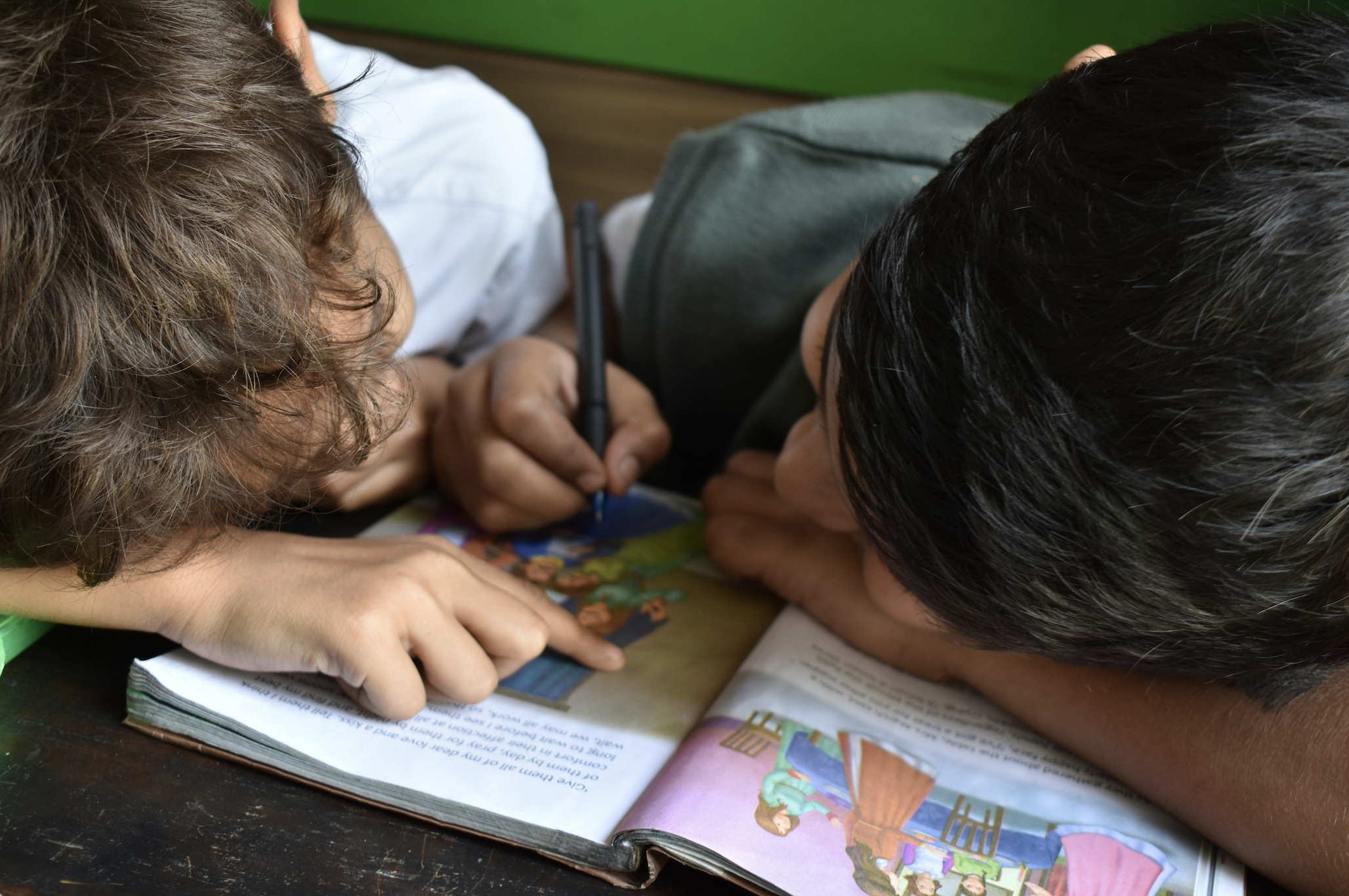
The Right has been very strategic at dividing us by focusing in on these trigger issues that we may not agree on, when there actually are some things that we do agree on, like that every child should be seen and valued in a classroom. When you look at the research, being culturally responsive, being inclusive in curriculum—this is just good teaching. I do believe in my heart that the majority of people in this country would actually know that and see that in their own child’s classroom: a child being seen, being heard, being valued for who they are and what they bring. There are ways we can frame it and talk about it that brings people together more than it pulls them apart.
JS: There’s this chicken and egg question. Is the research the driver of social movements, or are social movements the driver of research? I think it’s a moving mosaic. The example that immediately comes to mind is this question of disproportionate school discipline. There are researchers in education and psychology and sociology where that is their expertise, but that issue percolated largely through organizing efforts around the country of parents and civil rights organizations who were seeing these patterns and were able, through their organizing, to elevate it to discourse such that researchers then caught on. There’s a way that social movements benefit research and help researchers to see things they otherwise would not see. Because of that benefit, researchers owe something to social movements. We need to rethink our research as having social benefit so that requires us to think about how we help the movements that, in fact, have helped us to ask questions that have led to interventions or remedies to address the harms caused by unjust practices.
Funders have sometimes been cautious about the idea of researchers engaging in social movements. For many funders and for many researchers, it challenges this idea of the objective, neutral researcher coming in with no agenda. There are some concerns about bias, and I don’t think those concerns are misplaced. We need to think hard about questions of rigor and comprehensiveness in our work, but I don’t think it should prevent us from thinking about how to do this and how to do it well. This is a space where researchers haven’t done as much as we could.
How can researchers support educators on the frontlines of these attacks?
ASW: As a researcher, I stand on the shoulders of so many educators who’ve taught me many lessons about good teaching and learning. How can we share that to a broader audience that hopefully will listen? The first amicus brief was in the state of Oklahoma. The ACLU is challenging an Oklahoma statute banning discussions and curriculum related to race and sex. We brought together the research from these briefs, particularly the ones around teaching and learning and the socio-cultural context of learning, to speak back to how problematic that policy was. We framed it not only as what we know about good teaching and learning, but also in terms of the value of inclusive curriculum from a child development perspective and from a learning theory perspective. We looked at the Oklahoma state standards, which are part of their Every Student Succeeds Act plan that they had submitted to the first Trump administration for approval in 2017. Those standards included discussions of the Tulsa race massacre, the Indian Removal Act, the fact that Oklahoma was two years late in implementing the 19th Amendment so women couldn’t vote in that state for two years after other women could vote in this country. Our question to the judges was, how are you supposed to teach that if you can’t talk about race or sex? We just finished a second amicus brief in support of the ACLU case against the Department of Defense Education Activity that has banned nearly 600 books from their DoD schools. This second brief is a more focused on reading, since they attacked the books and the curriculum. These two briefs demonstrate how the body of research evidence often has the answers we need when inclusive curriculum and literature are censored.
JS: We’ve continued to be in collaborative conversations with other researchers and advocates who are trying to resist these bans on teaching and learning. Educators are really afraid. They don’t know what’s permissible. They have gone through rigorous teacher preparation programs and ongoing professional development about what is right and good in teaching the whole child, and what they’re being told to do runs counter to their professional wisdom and practice. They are very afraid of losing their jobs or worse, so engaging in this work and bringing the research to bear on the very laws and frameworks that are causing the fear and causing the anxiety, is a way of supporting educators. It’s a way of saying, here’s how research can help in pushing back on this so that teachers can be free to teach and do their jobs without fear of being fired or sued or doxed, which is what many teachers are experiencing around the country but especially in states where these bans have been especially restrictive, like Oklahoma and Florida.
In the coming years, what steps will researchers need to take to help repair the harms communities have experienced in the face of this backlash?
JS: We need to continue to collaborate across sector—researchers, practitioners, lawyers, advocates, unions. We also need research on these collaborative resistance efforts, what the effects of them have been. Many of them have been successful, and I think sometimes the onslaught of bans and restrictions can feel very overwhelming, and it can obfuscate the fact that when challenged in court, even in Florida, they are getting overturned. We need to keep an eye on resistance and how resistance is proving effective. I talked about legislative and judicial effectiveness, but on the ground, movement leaders are challenging these actions at school boards. They’re overturning school board elections. They’re organizing communities to advocate for inclusive and holistic education. We need more research on what folks on the ground are doing, how they’re doing it, and with what tools, including research. We need to document how people are working together across interest groups and across areas of expertise.
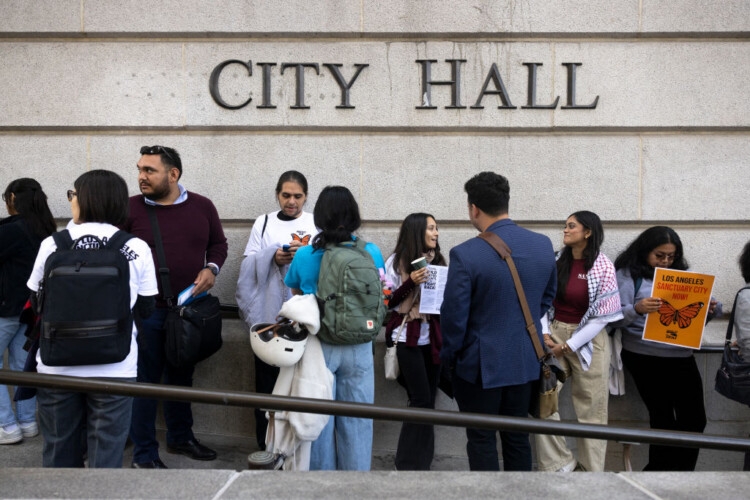
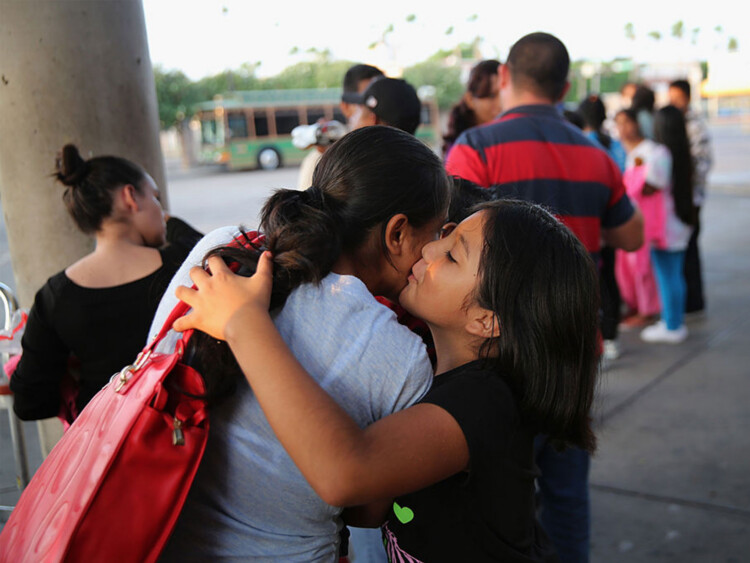
What’s most inspiring for me in thinking about local communities and networks, is that what’s being articulated in those movements is another vision for what public education can be, and, by extension, what our democracy can be: a public education that’s open to everyone, that protects immigrant children, regardless of documentation status, that provides curriculum that teaches the truth and affords students the respect to contend with very difficult topics. It also provides spaces of joy and exploration and discovery, and contributes to a better society where everyone is included and everyone belongs. What you’re hearing across these resistance movements in local communities are these really beautiful articulations of what we could be otherwise.
ASW: I am really drawn to the book Stephen Levitsky and Daniel Ziblatt (2023) wrote about the tyranny of the minority in authoritarian contexts and how it often silences what the majority of people really want and care about. What this project did was create a way of framing this work that will resonate with a large population of people who are on the ground, trying to do right by the children in our multiracial schools and classrooms, waiting for some more centralized leadership on these issues. Once we start to find the language and the messaging to counter the very negative, divisive rhetoric on the other side, we will start to connect these moments of resistance and vision forward, building a powerful and robust social movement.
***
References:
Ganz, M. (2010). Leading Change Leadership, Organization, and Social Movements. Harvard Business Press. https://leadingchangenetwork.org/app/uploads/2021/08/Leading-Change_-Leadership-Organization-and-Social-Movements.pdf
Ganz, M. (2024). People, Power, and Change: Organizing for Democratic Renewal. Oxford University Press.
Levitsky, Steven, and Daniel Ziblatt. Tyranny of the Minority: Why American Democracy Reached the Breaking Point. Crown, 2023.
Weiss, C. H. (1977). Research for policy’s sake: The enlightenment function of social research. Policy Analysis, 531–545. https://www.jstor.org/ stable/42783234