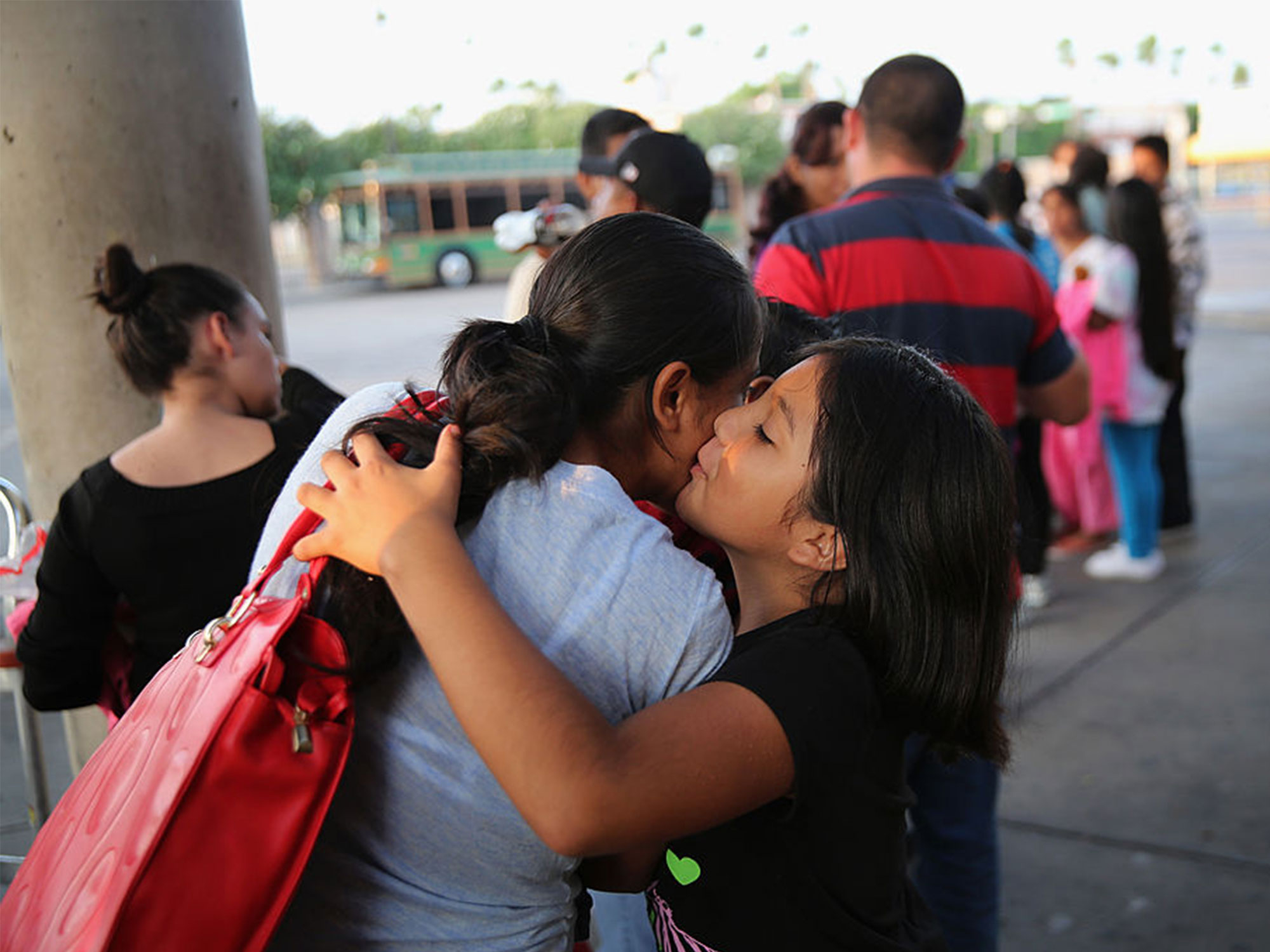
Across the United States, an estimated 6.3 million children under the age of 18 live with at least one unauthorized immigrant parent. Over 5 million of those kids are U.S. citizens (Gelatt et al., 2025).1 For these school-aged children, the classroom is not only a place of learning but also of refuge. Outside of school, many face a broader environment marked by immigration enforcement, family separation, and economic hardship. But even this refuge has limits, as the same climate of fear created by immigration enforcement and the threat of family separation seeps into schools, disrupts attendance, lowers test scores, and heightens anxiety (Bellows, 2019; Ee & Gándara, 2020).
Nowhere is this more palpable than in California, where about 20% of all children with unauthorized immigrant parents live (Gelatt et al., 2025). In response, many school districts across the state have taken steps to support these families. In the wake of intensified federal enforcement and anti-immigrant rhetoric, hundreds of districts adopted “safe-zone” resolutions affirming schools as welcoming spaces for immigrant-origin students and their families. These policies, sometimes symbolic and sometimes far-reaching, represent an effort by local educators and communities to counter the chilling effects of immigration enforcement and ensure that every child has the chance to learn.
Understanding whether these policies make a difference for students requires looking at how they experience school and how they perform academically. With this in mind, our research examines the impact of safe-zone policies on standardized test scores in math and English language arts, absenteeism, and graduation rates to capture inequities in both access to learning and academic outcomes. Our work shows that while immigrant-origin students face persistent disparities, safe-zone resolutions can help protect their academic progression and sense of belonging (Amuedo-Dorantes et al., 2022, 2023; Amuedo-Dorantes & Bucheli, 2024, 2025).
Persistent Academic Disparities
California boasts the largest economy in the country, yet it also ranks among the most unequal states. These inequalities are especially acute in the Central and Imperial Valley regions, where large Hispanic, immigrant, and low-income communities contend with entrenched barriers to educational opportunity. Despite statewide reforms to address inequity, gaps persist.
Drawing on more than a decade of student-level data, we find that Hispanic students in these regions score five to six percentiles lower on English language arts and math standardized tests than their White peers. Black students face even steeper gaps, trailing by nearly 11 percentile points. These disparities grow more pronounced in middle and high school, as academic trajectories solidify and future opportunities narrow. The disparities extend beyond test scores, with Hispanic, Black, and economically disadvantaged students exhibiting higher absenteeism and lower graduation rates (Amuedo-Dorantes & Bucheli, 2024).
These gaps are not abstract figures; they reflect lost opportunities for students and communities and signal a profound loss of human potential. As home to one of the largest and youngest immigrant-origin student populations in the nation, California cannot afford to allow such disparities to persist.
Immigration Enforcement as a Barrier to Learning
Educational gaps do not exist in isolation. For immigrant-origin students, longstanding inequities are compounded by the effects of immigration enforcement. Over the past two decades, intensified deportation efforts have disrupted families and created climates of fear in many immigrant communities.
A substantial body of research shows that these policies shape children’s academic trajectories. In our prior work, we document how heightened immigration enforcement reduces school enrollment among Hispanic students, increases absenteeism, raises dropout and grade repetition rates, and lowers standardized test scores (Amuedo-Dorantes & Lopez, 2015, 2017; Bucheli et al., 2021). Other studies find that the consequences extend to students’ mental health, with children exposed to the deportation of a parent being at higher risk of anxiety, depression, and symptoms of post-traumatic stress disorder (Allen et al., 2015; Rojas-Flores et al., 2017). Even when families remain together, the perceived threat of deportation can undermine children’s ability to focus, sense of safety, and ability to build trusting relationships with teachers and peers (Cardoso et al., 2021; Zayas & Gulbas, 2017).
“Understanding whether these policies make a difference for students requires looking at how they experience school and how they perform academically.”
These findings highlight a profound tension with federal immigration policies that often operate independently of, and at times in direct conflict with, the developmental and educational needs of children. For many immigrant-origin students, including millions of U.S. citizens, enforcement practices reverberate into classrooms and deepen existing inequities.
The Promise of Safe-Zone Resolutions
Against this backdrop, safe-zone resolutions emerged as one way local educators and communities sought to support students in immigrant families. Building on the Supreme Court’s 1982 Plyler v. Doe decision, which guaranteed all children access to public education regardless of immigration status, these district-level policies aim to minimize immigration enforcement-induced fear at school and to create more inclusive environments.
While safe-zone initiatives vary by district, they commonly include:
- Prohibiting Immigration and Customs Enforcement (ICE) from entering school campuses without a warrant.
- Limiting the sharing of student information with immigration authorities.
- Offering counseling, legal referrals, and other resources to students and families.
- Training school staff to recognize and respond to the needs of students in mixed-status households.
- Publicly affirming schools as welcoming and safe spaces for all students.
By 2021, at least 300 school districts in California had adopted safe-zone resolutions, protecting millions of students (Amuedo-Dorantes & Bucheli, 2025). While these efforts are sometimes dismissed as symbolic, our research shows that they have tangible effects on students’ academic and social outcomes (Amuedo-Dorantes et al., 2022, 2023). Local efforts can play an important role in counteracting the effects of federal policies that may overlook children’s developmental and educational needs.
Evidence of Impact
To understand the effects of safe-zone policies on student well-being and achievement, we drew on multiple data sources. First, using data from the Between the Lines study—a binational survey of U.S.-citizen adolescents with deported or vulnerable parents—we examined how safe-zone policies impact student outcomes. We find that adolescents attending schools in safe-zone districts were more likely to earn As, less likely to repeat a grade, and less likely to report conflicts with peers or teachers. Importantly, the benefits grew with longer exposure to safe-zone protections (Amuedo-Dorantes et al., 2022, 2023).
We then turned to statewide administrative data from California to assess broader effects. Analyses of graduation rates and standardized test scores indicate that safe-zone policies significantly improved outcomes for Hispanic students, English learners, and economically disadvantaged youth—the very groups most vulnerable to falling behind academically.
Educators in these districts also reported feeling more supported and better able to meet students’ needs, and students described stronger relationships with peers and teachers. These shifts in school climate represent key mechanisms through which policy protections translate into academic gains (Amuedo-Dorantes & Bucheli, 2025).
Across both data sources, certain components of safe-zone policies stood out as especially consequential. Limiting immigration-enforcement access to campuses and providing counseling and resource referrals for families experiencing immigration-related stress were particularly effective. Together, these measures reduce fear, build trust, and help students remain engaged in school even when their family circumstances are uncertain.
Policy Lessons
The evidence from California’s safe-zone policies offers several lessons for policymakers, funders, and educators seeking to support immigrant-origin students.
First, local action matters. Even when federal policies generate fear and instability, local institutions can buffer the impact. School districts are uniquely positioned to affirm students’ right to learn and to cultivate environments where immigrant-origin children feel safe and supported.
Second, safe zones must be more than symbolic. Policies that restrict immigration-enforcement access to school facilities and provide concrete support measures, such as counseling, clear protocols, and staff training, yield measurable academic and social benefits. By contrast, resolutions that simply declare schools to be “safe” without operational guidance are unlikely to shift outcomes.
“Together, these measures reduce fear, build trust, and help students remain engaged in school even when their family circumstances are uncertain.”
Third, ongoing evaluation is essential. While the evidence to date is encouraging, districts should embed monitoring and assessment from the outset to identify which components work, for whom, and under what conditions.
Finally, protecting immigrant youth is equitable and economically prudent. Closing educational opportunity gaps could expand the U.S. economy by trillions over the coming decades (Lynch & Oakford, 2014). Ensuring that immigrant-origin youth can succeed and contribute to their communities is not only a matter of fairness; it is also a strategy for shared prosperity.
Conclusion: Schools as Anchors of Equity
At a time when immigrant youth face widening inequities and shifting policy environments, safe-zone schools illustrate how local institutions can protect and advance vulnerable students. By ensuring that classrooms remain places of learning rather than fear, districts in California and beyond have demonstrated that it is possible to reduce educational disparities and support student well-being.
The lesson is clear. Protecting children’s access to education cannot rest solely with federal or state governments. Local communities, including schools, teachers, and counselors, play a vital role in safeguarding opportunities for immigrant youth.
Ultimately, safe-zone resolutions remind us that schools are more than sites of academic instruction. They function as anchors of belonging, stability, and opportunity. When we invest in policies that protect immigrant-origin students, we invest in the future of communities nationwide and strengthen our shared capacity to learn, grow, and prosper together.