Introduction
Legal status profoundly affects the well-being, opportunities, and futures of children in immigrant families.1 The immigration control system produces a hierarchy of unequal statuses (Waldinger, Hoffman, & Lai, 2023), ranging from naturalized citizens to lawful permanent residents (or “green card” holders) to various forms of temporary authorization, such as Temporary Protected Status and Deferred Action for Childhood Arrivals (DACA). At the same time that this system stratifies access to most public goods, benefits, and rights (Waters & Gerstein Pineau, 2015), legal avenues to obtain more secure statuses have dramatically narrowed in the past decades. Immigrants who cannot access legal avenues to regularize their status become categorized as undocumented (Menjívar, 2023).
Today, immigrants are detained, deported, and separated from their families based on the presumption of “illegality.” For decades, enforcement policies have primarily targeted Latino immigrants, so much so that being Latino on any immigration status and even U.S.-born has become associated with undocumented status (Armenta, 2018; Asad, 2024; Menjívar, 2021; Menjívar et al., 2018; Provine et al., 2015). However, over the past decade, and especially since January 2025, the enforcement net has been cast far more widely and forcefully, still focusing on Latinos but affecting all immigrant groups across the country. The effects of this new enforcement strategy on immigrant families and their children are impossible to assess as recent events unfold and policies shift. However, a wide swath of the U.S. population will feel its impact. For instance, as of early 2025, an estimated nearly 28.2 million U.S. residents, including 19.5 million Latinos, will live in mixed-status or undocumented households; that is, 1 in 12 total U.S. residents and almost 1 in 3 Latinos live at risk of family separation through deportation (Connor, 2024).
Nationwide, one in four children have at least one immigrant parent (Haley, Gonzalez, Bernstein, & Kenney, 2025) and is therefore currently in the eye of the enforcement storm. An estimated 5.62 million U.S. citizen children live with at least one undocumented household member—85% of them are under the age of 15, with 2.79 million in elementary and middle school years (Lisiecki, Velasco, & Watson, 2025). For 2.66 million children, the parents in the household are all undocumented (Lisiecki, Velasco, & Watson, 2025). Thus, “3.8% of all citizen children in the U.S. are at risk of being left with no parent in their home under a mass deportation scenario” (Lisiecki, Velasco, & Watson, 2025). Considering the size of this population and immigrants’ deep social and economic embeddedness in U.S. society, the effect can reverberate across demographic groups beyond the immigrant population.
What approaches can reduce inequalities among immigrant children and children of immigrants when current policies aim not only to exclude them from resources and benefits, but to exclude them from the nation altogether? In today’s multi-layered, multi-agency, multi-pronged enforcement strategies, an increasingly punitive and exclusionary policy context holds profound consequences not just for inequality trends but for the very survival of many immigrant families. This omni-crisis will require researchers to think expansively and recalibrate frameworks to respond to these new forms of inequality, where legal status will continue to shape immigrant children’s well-being.
Given the effects of the enforcement system on immigrant children and children of immigrants, as demonstrated in several years of scholarship on this topic, I propose a research focus on responses to harmful policies to protect immigrants’ well-being. A key component of this response comes from civil society organizations where immigrants—and especially their children—play prominent roles. These responses can ameliorate detrimental effects and, significantly, underscore the active role that immigrant children occupy in their families and across civil society in promoting positive change. The goal of this essay, therefore, is to encourage studies on the power and potential of civil society to lessen policy harms in the short-term and to reduce the inequalities faced by immigrant children and children of immigrants in the long-term.
The first section of this essay provides an overview of the effects of legal status on immigrant children’s well-being and its potential to shape enduring inequalities that they face. The following section highlights key aspects of the current enforcement context that have significantly magnified the effects of legal status on immigrant families and children. The third section presents three examples of civic society organizations’ responses to current policies to lessen their harmful effects, and as potential sites for research today. The conclusion underscores why researchers should examine the key role of civil society organizations in reducing inequalities for immigrants, reshaping institutions, promoting just policies, and strengthening democracy.
How Legal Status Shapes Youth Lives and Outcomes
Immigrant children’s legal status fundamentally affects their life chances (Menjívar, 2006, 2022a). For undocumented youth or those with temporary protections like DACA, legal uncertainty limits their ability to plan for the future, despite often having been raised, socialized, and educated in the United States. Undocumented status creates multiple obstacles for immigrant youth across almost all dimensions of life, including access to higher education and jobs (Abrego, 2006; Enriquez et al., in press), friendships, and romantic relationships (Enriquez, 2020). Thus, when immigrant youth shift from a less secure to a more secure legal status (e.g., from undocumented status to DACA), a range of indicators show improvement. For instance, while mental health among Latino youth before obtaining DACA was primarily predicted by socioeconomic status, psychological well-being after DACA was found to be strongly predicted by this legal status, even if having DACA did not reduce worry among these youth (Patler & Pirtle, 2018).
“What approaches can reduce inequalities among immigrant children and children of immigrants when current policies aim not only to exclude them from resources and benefits, but to exclude them from the nation altogether?”
Legal status not only affects immigrant children and the children of immigrants directly through their own legal status, but also indirectly through their parents’ (Yoshikawa, 2011), other family members’, and even their grandparents’ statuses (Bean, Brown, & Bachmeier, 2015). U.S.-born children of parents with insecure legal statuses can grow up in environments of chronic stress and uncertainty, which may negatively affect their emotional development, academic performance, and sense of belonging (Suárez-Orozco et al., 2011; Yoshikawa, Suárez-Orozco, & Gonzales, 2018). When parents lack secure legal statuses, their access to services and benefits for their families is drastically limited (Yoshikawa, 2011), especially when these parents are particularly surveilled (Asad, 2024). As legal status has become a critical determinant for accessing goods and services, its effects on immigrant families include economic insecurity due to limited job opportunities, restricted access to public benefits and higher education, fear of family separation through detention or deportation, and reduced access to healthcare and social services (Feliciano & Lanuza, 2017; Vargas, Sanchez, & Juárez, 2017). As such, parents’ and children’s legal vulnerability functions as a structural barrier that reinforces inequality and hinders integration, revealing how legal status operates as a multigenerational mechanism of stratification (Enriquez et al., in press; Waters & Kasinitz, 2021).
Immigrant legal status is also the main factor in identifying immigrants for enforcement. This enforcement context affects Latinos in particular, with effects felt across legal statuses, including naturalized citizens and U.S.-born individuals (Asad, 2020; Johnson et al., 2024). Under these conditions and given the association of Latinos with an undocumented status (Menjívar, 2021), Latinos have become the preeminent target for immigration enforcement. Immigrant youth in these families have experienced harmful effects in consequential ways, as documented in the robust body of work on the impacts of heightened enforcement in the lives of immigrant children and youth (Amuedo-Dorantes & Puttitanun, 2018; Cardoso et al., 2021; Cervantes, Ullrich, & Matthews, 2018; Rubio-Hernandez & Ayón, 2016). Family separation and the risk of deportation can have a profound impact on children of all ages, especially when one parent is deported and the other becomes the sole breadwinner and caretaker (Dreby, 2015). These children often show signs of trauma that meet criteria for DSM diagnoses even after family reunification (Hampton et al., 2021). Cycles of deportability that many Latino parents and their children experience repeatedly, in addition to status-related stressors, profoundly impact immigrant youth’s psychosocial development (Ellis, Offidani-Bertrand, & Ferreira, 2022).
At the same time, it is important to recognize that the lives of immigrant youth are multifaceted, as they are active and engaged members of their families, especially in undocumented or mixed-status families. These children work for pay outside the home to help their parents financially (Enriquez et al., in press), assist their parents at work (Estrada, 2023), take on caring responsibilities in families (García-Sánchez, 2018), serve as translators (Faulstich Orellana, 2009), and act as cultural brokers and negotiators in community interactions (Katz, 2014). Through their active roles in their families, they become adept at navigating institutions and bureaucracies and, through exposure to school curricula, develop a civic voice (Callahan & Muller, 2013; Terriquez & Lin, 2019). They also actively socialize their families into political participation and rights mobilizations (Trost & Bloemraad, 2008; Wong & Tseng, 2008), thereby becoming agents of change (Street, Jones-Correa, & Zepeda-Millán, 2017). Highlighting their agency, immigrant youth and families demand and co-create relationships of care and connection through community and pedagogical relationships (Bellino & Oliveira, 2025).
The Current Immigration Landscape
In the current context, administrative and enforcement policies are being passed precisely to create and amplify existing inequalities among immigrant populations.
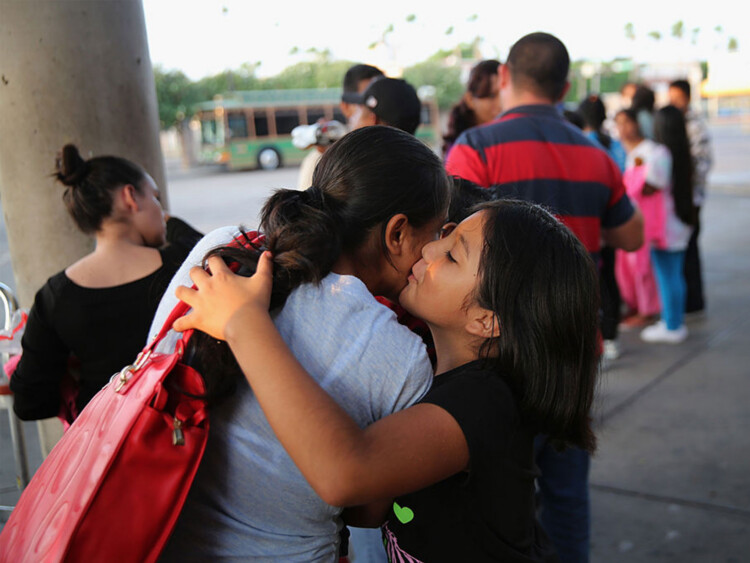
Broadcast regularly in the media, detention practices are the most visible manifestations of the current immigration enforcement system. According to estimates, deportations from January 2025 are on track to surpass historical records set by the Obama administration (Chishti & Bush-Joseph, 2025). Given the formidable expansion and accelerated pace of enforcement today, it is still unclear how many children have been separated from parents who are either detained or deported.
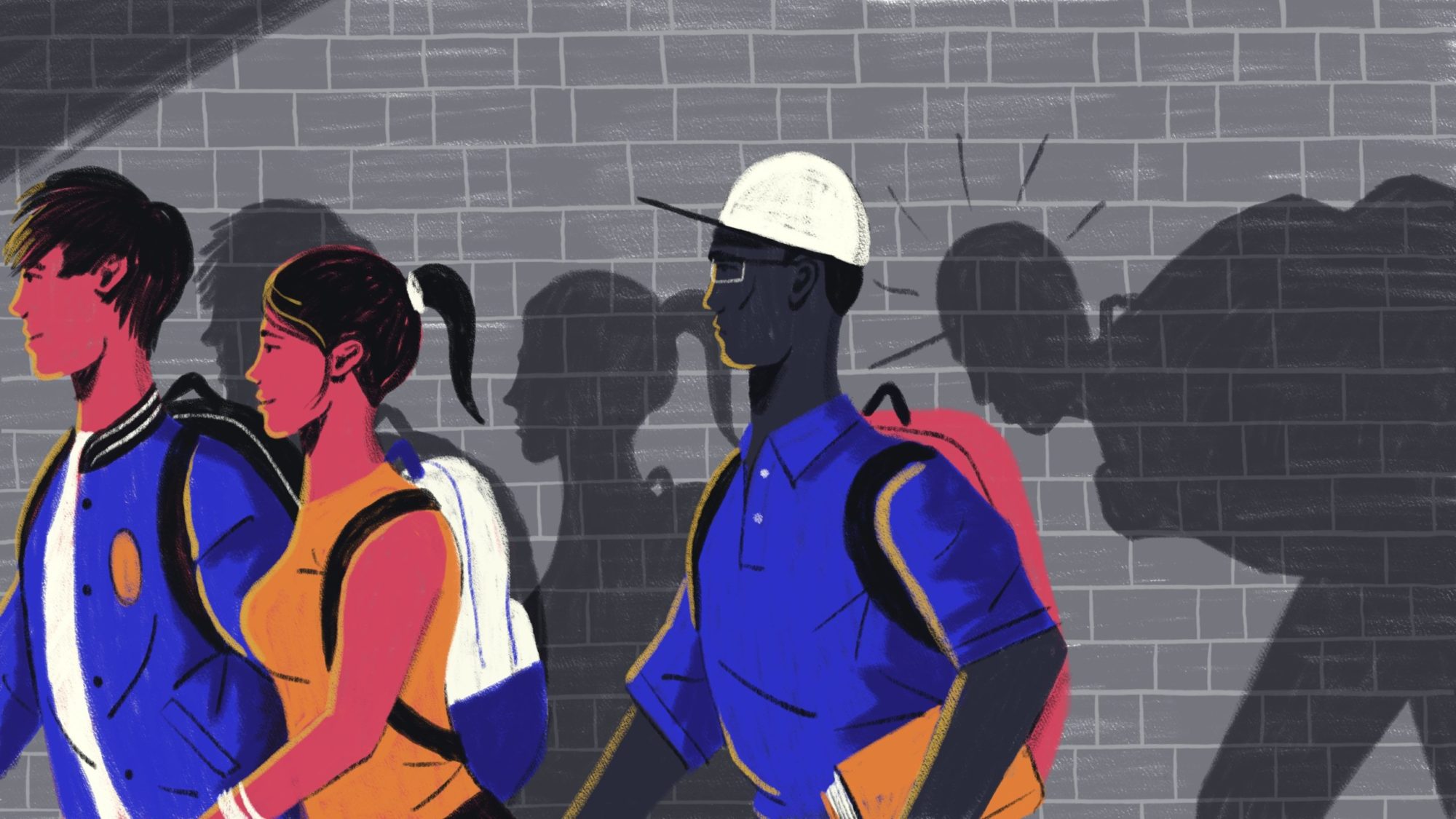
Enforcement policies strip immigrants of even partial protections, which creates a growing population at risk of detention and deportation and permanently fearful of contacting institutions. With enforcement carried out everywhere, and parents arrested in front of their children in summer camps, sports fields, school perimeters, and so-called “sensitive locations,” such as courthouses, religious spaces, and hospitals, this heightened state of alert will reverberate across immigrant families and communities. Living in a heightened enforcement context can also affect non-immigrant school peers, as demonstrated in a survey of middle-school youth in Arizona, where non-immigrant U.S. citizen peers experienced similar negative effects as their immigrant peers (Santos, Menjívar, & Godfrey, 2013). The impact of living in constant fear of detention for themselves and their peers will no doubt have lasting effects on these youth. In the short term, with Immigration and Customs Enforcement (ICE) agents showing up at sports events, immigrant youth will not attend them; with ICE’s increased presence around schools, school absenteeism and fear in the classroom increase (McConnell & Hubbard, 2025). Recent reports from school districts show that enforcement operations are impacting K-12 enrollments, with drops in the tens of thousands in large cities, disrupting learning but also school districts’ financial shortfalls (Blume & Payne, 2025, November 29). In the long term, therefore, these actions threaten children’s right to education, with some states already proposing legislation that would chip away at this right (McConnell & Hubbard, 2025).
Significantly, the impactful images of explicit harm to immigrants and their families are only the tip of the iceberg. A complex network of laws, policies, bureaucratic practices, and cross-agency agreements amplifies the effects of legal status on immigrant families and their children’s life chances. The current administration relies on a multi-agency approach that involves nearly all federal agencies, beyond those explicitly charged with immigration matters. For instance, the Department of Health and Human Services announced that undocumented immigrants will no longer have access to Head Start and other related low-income assistance programs (Gold, 2025, July 10). The IRS is also coordinating with the Department of Homeland Security. The reconciliation spending bill, signed into law as H.R.1 in July 2025, will prohibit the families of an estimated 2.6 million children who do not have at least one parent with a Social Security number from receiving the Child Tax Credit; it will also make permanent the requirement that children must have Social Security numbers to claim the CTC (American Immigration Council, 2025, July 14). This level of enforcement and legislative activity shows no signs of slowing, as H.R. 1 allocates $170.7 billion in additional funding for immigration and border enforcement-related activities, in addition to a series of policy changes across agencies with direct impact on almost all spheres of life for immigrant families and their children (American Immigration Council, 2025, August 14).
Although the policy and enforcement terrain is in flux, a vital area for research is responses to these policy shifts, which can ameliorate their harmful effects.
Civil Society Responses and New Directions for Research
The challenges created for immigrant families and their children are formidable and seemingly intractable. However, civil society organizations are actively responding to address short- and long-term policy harms, coordinating across organizations and doing work that reflects their vision and strengths. These are key areas where research might be helpful. These organizations are not simply helping immigrants; they also create spaces where immigrant youth are protagonists, provide solace, services, and support to others, and advocate for policy change. These organizations have an extended history of mobilizing for immigrants’ rights, particularly in times of policy threats (Bloemraad, Silva, & Voss 2016; Burciaga & Martinez, 2017; Nicholls, 2013; Zepeda-Millán, 2017). As they already have an organizational infrastructure in place (Mora, 2016), they are active in responding in today’s context. Below, I share a few non-exhaustive examples of these organizations, explain why their work is important for addressing inequalities among immigrant youth, and outline directions for future research in this area.
Immigrant rights organizations play a vital role in supporting immigrant families by addressing legal, social, and emotional challenges (Milkman & Terriquez, 2012; Pallares & Flores-González, 2010; Pantoja, Menjívar, & Magaña, 2008; Strunk & Leitner, 2013). Guided by principles of social justice, these groups provide critical services, raise funds, engage in advocacy, and offer information and resources to help families navigate a complex immigration system. They offer free or low-cost legal aid for asylum applications, deportation defense, status renewals, and adjustment of status. In addition to providing immigrant families with support and assistance, these organizations push for immigrant-friendly policies at the local, state, and federal levels, where significant legal responses are being initiated.
“Although the policy and enforcement terrain is in flux, a vital area for research is responses to these policy shifts, which can ameliorate their harmful effects.”
During particularly challenging times for immigrants, as is the case today, these organizations mobilize urgent resources and act as crisis responders to families affected by raids, detention, or deportation. These organizations connect immigrant families with broader coalitions working for racial, economic, and social justice; they also offer civic education and training programs that build capacity for self-advocacy. In short, immigrant rights organizations are not only service providers but also key actors in the broader struggle for equity and inclusion, working to protect families and shift systemic conditions that marginalize them.
Significantly, immigrant youth, like the undocumented “Dreamers,” are key actors (Milkman, 2017; Nicholls, 2013). They are active participants in the movement, contributing youth-specific expertise such as using social media and activating communication networks. Research has shown that the children of undocumented immigrants are interested in political involvement and believe protests are effective (Street, Jones-Correa, & Zepeda-Millán, 2017). Immigrant rights organizations often create youth-specific programs to foster leadership, political education, and organizing skills. These opportunities empower youth to become spokespeople and decision-makers within the movement.
An extensive body of scholarship on immigrant rights organizing already exists (Bloemraad, Chaudhary, & Gleeson, 2022), especially underscoring immigrant youth participation. New research in this area can contribute theoretically by conceptualizing a new policy context, as local context has been shown to shape these organizations’ reach and effectiveness (Burciaga & Martinez, 2017; Steil & Vasi, 2014), and empirically by including new cases, new participants, and the different coalitions emerging today.
Immigrant youth organizers are central in the mobilizations described above (Braxton, 2016; Valladares et al., 2021), taking prominent roles in the immigrant rights movement, even when undocumented (Escudero, 2020). These youth are founding their own organizations and serving as organizers, advocates, and leaders within immigrant rights organizations, often connecting to other critical issues (Terriquez, 2015; Terriquez & Milkman, 2021). Their participation is vital not only to a movement’s energy and direction but also as a form of empowerment in the face of marginalization. Those born in the United States and those who arrived at young ages (e.g., the 1.5 generation) who live in mixed-status families advocate for their parents and other family members, while also socializing them politically in a trickle-up effect (Terriquez & Kwon, 2015). Immigrant youth organize rallies, protests, and community events to raise awareness and demand policy changes, as they did when they mobilized for DACA, in-state tuition access, or pathways to citizenship (Nicholls, 2013). The U.S.-born children of parents who hold Temporary Protected Status, for instance, are active participants in this alliance, holding press conferences themselves and accompanying the alliance as they advocate for their rights in Washington, DC. Social movements research can identify potent avenues to reduce youth inequality, and immigrant youth organizing may be a fruitful area for researchers to explore (Irons, 2025).
Youth organize support groups, mentorship networks, and resource-sharing platforms to help peers navigate challenges such as applying to college, accessing health care, or dealing with legal uncertainty (Rincón, 2008). These youth networks are especially vital for undocumented or mixed-status youth, where they play a critical role for their siblings and younger relatives. They also engage in legislative advocacy—meeting with lawmakers, giving public testimony, and shaping policy proposals. They help build pressure for local and national reforms by directly engaging political processes, highlighting the unique needs of immigrant youth, even seeking to reframe the meanings of citizenship (Patler, 2018). Future research might examine how a variety of these informal networks improve opportunities and outcomes for immigrant-origin youth.
Through art, music, poetry, and digital media, immigrant youth express their identities and challenge dominant narratives. Creative forms of civic participation allow them to engage broad audiences and preserve cultural memory while imagining more just futures. Youth frequently share powerful personal immigration stories—through speeches, social media, art, and testimony—to humanize policy debates and counter dehumanizing narratives. This “coming out” as undocumented or from mixed-status families (Enriquez & Saguy, 2021; Valdivia et al., 2025) is a powerful form of activism that builds solidarity. Studies here might ask: How do immigrant youth’s experiences in these creative forms of civic participation improve their sense of belonging and psychosocial development?
In sum, immigrant youth are not passive recipients of support but dynamic agents of change across various spaces, including schools, religious congregations, and rights organizations. They have demonstrated that their civic participation in immigrant rights organizations has significantly contributed to making policy more inclusive, social justice oriented, and forward looking.
Religious institutions have historically played a vital role in the integration of immigrants in U.S. society (Cadge & Ecklund, 2007; Hirschman, 2004; Warner & Wittner, 2008) by serving as trusted community anchors that provide material, moral, and advocacy support (Menjívar, 2003, 2022b; Stepick, Rey & Mahler, 2009; Tseng, 2015). Upon arrival in the United States, immigrants often turn to their religious institutions, as these tend to offer familiar and welcoming spaces. Churches, mosques, synagogues, and other religious organizations provide food, shelter, clothing, and emergency financial assistance to immigrant families in need (Hondagneu-Sotelo, 2008; Menjívar, 2003). Some offer transitional housing, job placement assistance, community pantries, and spiritual comfort, which are particularly needed for individuals excluded from public aid due to their immigration status (Hondagneu-Sotelo, 2006). Many religious institutions partner with legal aid groups to offer “know your rights” workshops, legal clinics, and assistance with immigration paperwork, such as asylum applications or citizenship forms. Faith-based organizations support sanctuary efforts to shield individuals from deportation (Wild, 2010). As they also have established partnerships with governments to offer a range of services (Greenberg, 2001), these organizations can serve immigrants through various programs.
Congregations’ pro-immigrant rights work does not focus solely on providing immediate assistance; religious leaders across faith communities are often at the forefront of public advocacy for immigrant rights, drawing on scripture and faith-based principles of justice, compassion, and hospitality. For instance, within the Catholic Church, the Pope and bishops have called for more humane treatment of immigrants, including a Special Message on Immigration (United States Conference of Catholic Bishops, 2025, November 12). Meanwhile, priests and nuns work on the ground provide support, accompany immigrants to government institutions, and work for a more compassionate treatment of immigrants. Religious leaders join ecumenical efforts to lobby for humane immigration policies, oppose family separation, and organize solidarity actions. Young immigrants are also actively involved in religious spaces, particularly in youth ministries and spaces for integration (Canizales, 2019; Kogan, Fong, & Reitz, 2019). They are catalysts for change in some congregations (Vieytez, n.d.) as they strive to address the challenges immigrants face today. Overall, religious institutions serve as service providers and help immigrant families survive immediate hardships, and are also promoters of civic participation, advocating for long-term solutions.
“Immigrant youth are not passive recipients of support but dynamic agents of change across various spaces, including schools, religious congregations, and rights organizations.”
Building on what we know, future research might investigate, for example, how religious organizations mobilize for policy and whether material or social support provided by religious institutions lessens the stressors of daily living in hostile conditions and reduces inequality in children’s school attendance and academic progress.
Local (municipal and state) governments are not civil society actors, but they are integral in creating the contexts within which immigrant rights organizations work, as they provide essential spaces for civic participation in support of immigrant rights (Burciaga & Martinez, 2017; Valdivia, 2019). Local governments vary in their responses to federal policies—with some amplifying and others counteracting their effects (Burciaga et al., 2019)—and, as such, are important mediators between the federal level and immigrant groups. Some of them develop policies and legal mechanisms to address harmful immigration policies that affect families in their jurisdictions (Burciaga, 2025). However, local and state governments vary significantly in their receptiveness to working with immigrant rights organizations and can provide significant support to immigrant families today. This variation can include stepping in to provide services or offer protections, such as access to higher education through in-state tuition, access to health care and subsidized clinics, social services, driver’s licenses, and sanctuary policies to limit cooperation with federal enforcement (Amuedo-Dorantes, Arenas-Arroyo, & Sevilla, 2020; Marrow & Joseph, 2015; Ovink, Ebert, & Okamoto, 2016; Vargas, Sanchez, & Juárez, 2017; Van Natta, 2023). Although the current climate can significantly undermine the work local and state governments do on behalf of immigrant families, and there is substantial variation across these bodies in their support for immigrant families, they nonetheless constitute a vital leverage point. Thus, these levels of government, in conjunction with immigrant youth’s active participation in them, provide fruitful avenues for research on efforts to lessen harmful policy consequences for immigrant communities. Variation across states and levels of government offers a research angle with rich potential for exploring the effects of policies at this level.
Previous Foundation-funded studies have begun to explore how local policies have reduced inequality for immigrant youth. One study by Catalina Amuedo-Dorantes (2024-2026), for example, is investigating whether school district safe-zone policies improve academic outcomes for immigrant youth. Another, by Cecilia Ayón (2020-2023), examined whether sanctuary city policies improve mental health outcomes for Latinx immigrant youth. New research may look at other actions by local governments, including state tax credits, educational access, Medicare, and other relief policies.
Conclusions
The current climate has proven to be hostile for immigrant families and their children. However, civil society organizations, such as those I have mentioned in this essay, are working on the ground to ameliorate these effects, with youth playing prominent roles. As we head toward the future, research can illuminate the strategies these organizations have adopted on behalf of immigrant youth and investigate how these supports can reduce long-term inequality.
Comparative research across civil society organizations and across states and localities will be especially fruitful to center the lives of immigrant youth as active members of their families and communities. As today’s enforcement context has affected an ever-expanding range of immigrant groups, it will be important to capture this variation across groups, especially as immigrant youth exercise their right to belong. For example, do immigrant rights groups in different policy contexts achieve goals that protect immigrant families and young people in them, and improve educational access in the future? How do religious institutions at the local level protect the rights of immigrant children and families? Do local or state political contexts create conditions that lead to better outcomes for immigrant youth? How does immigrant youth collective organizing lead to changes in immigrant-serving institutions and policies in ways that can improve immigrant youth outcomes?
Importantly, more than ever, research on immigrant populations and civil organizations responding to this moment should exercise ethical practices, as this population’s vulnerabilities continue to grow. As we have argued (Bloemraad & Menjívar, 2022), formal research protocols for protecting confidentiality are necessary but not sufficient, particularly when the risks to participants can amount to upending of lives in families and communities.
Social science research has tremendous promise to shed light on policy- and practice-relevant questions for how to support, protect the rights, and elevate the lives of immigrant youth in times of intense backlash and, hopefully, rebuild a future under which immigrant youth, as members of their families and communities, can flourish.